
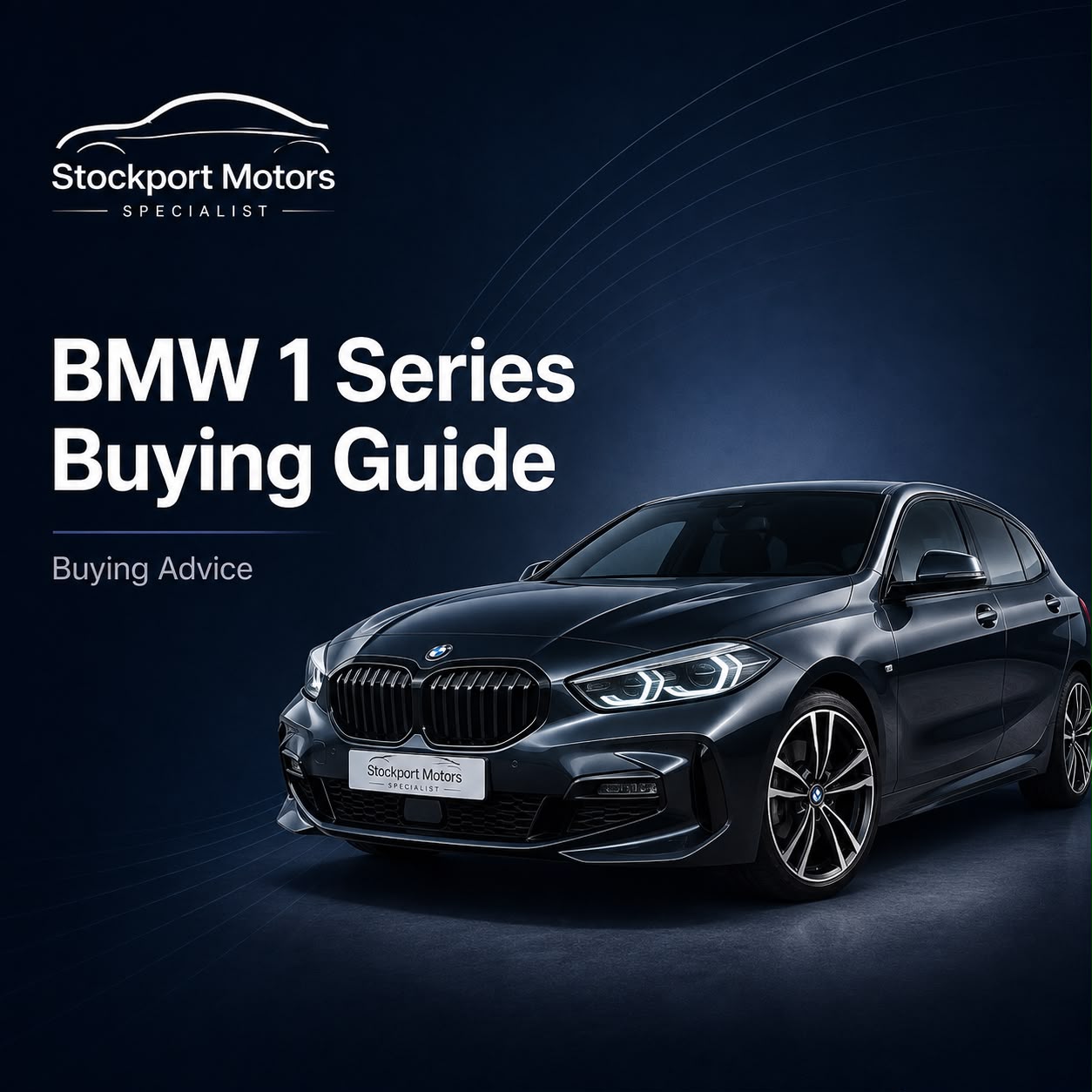
The 1 Series is one of the most popular cars on our forecourt, and for good reason: it drives well, holds its value and is cheap enough to run as an everyday car. Here is what we look at when we buy one, and what you should look at before you hand over any money.
Which engine should you go for?
The 116d and 118d are the sensible everyday choices if you cover motorway miles — low tax, strong economy and plenty of pull for overtaking. If most of your driving is short trips around Stockport and Manchester, a petrol 118i is the better bet because it avoids the diesel particulate filter issues that come with stop-start town use.
The 120d sits in the middle: noticeably quicker than the 118d without a big jump in running costs. The M-badged cars are great to drive but expect higher insurance, thirstier tanks and more expensive tyres.
Common issues worth checking
On diesels, listen for a rattle on cold start and check the service history for timing chain work on earlier cars. Look for oil weeping around the sump and rocker cover, and check the coolant level and the condition of the expansion tank.
On petrols, check for a smooth idle and no hesitation under load. On all cars, test every electrical item: windows, mirrors, air conditioning, heated seats and the iDrive screen. Small electrical faults are cheap to fix but a good indicator of how the car has been looked after.
Paperwork matters more than mileage
A 90,000 mile 1 Series with a full stamped history and recent belt or chain work is a better buy than a 50,000 mile car with two stamps and no MOT advisory trail. Ask for invoices, not just stamps.
Every 1 Series we sell is listed with its mileage, service history and MOT status up front, so you can judge the car before you travel.
- BMW
- buying guide
- hatchback
- reliability